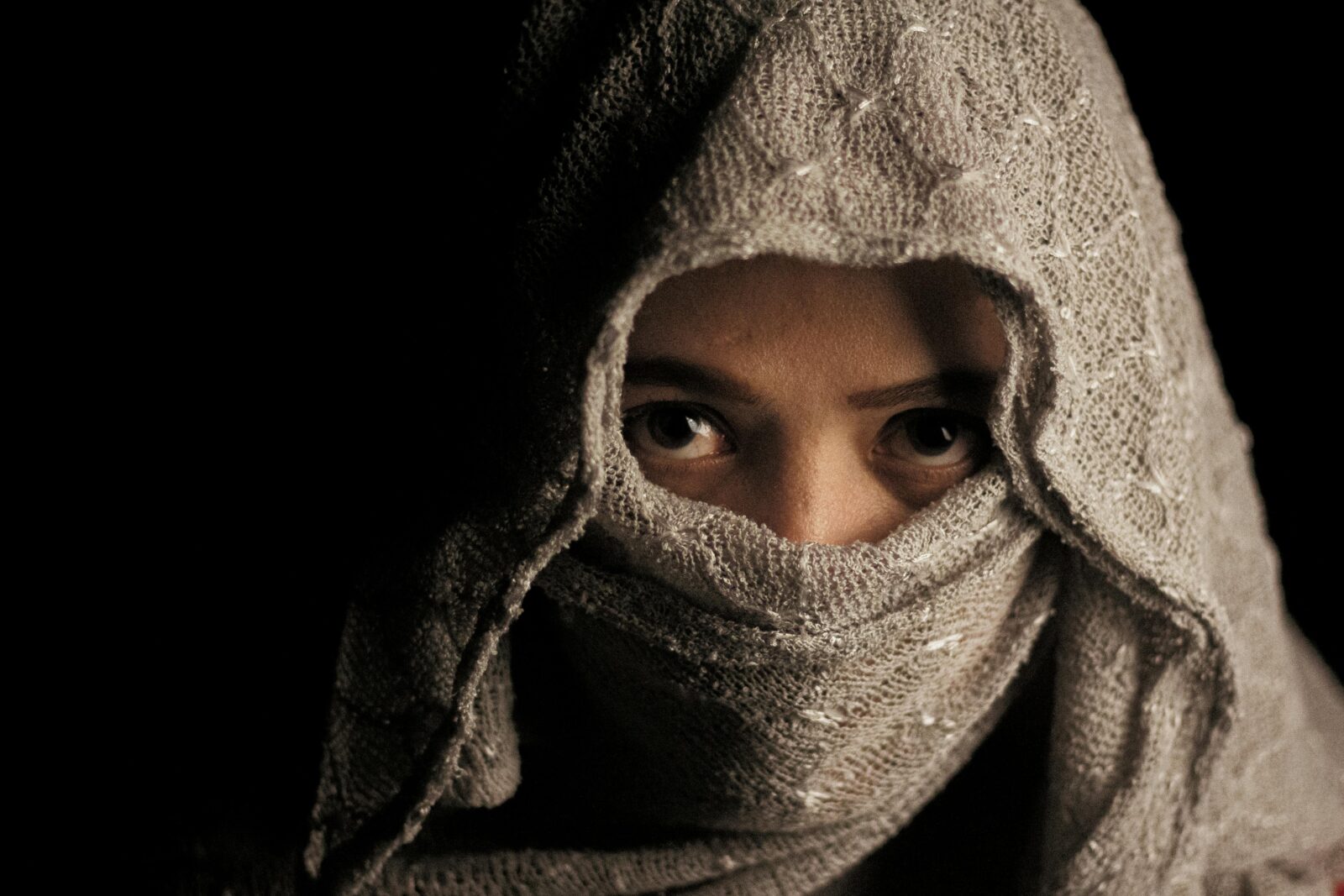
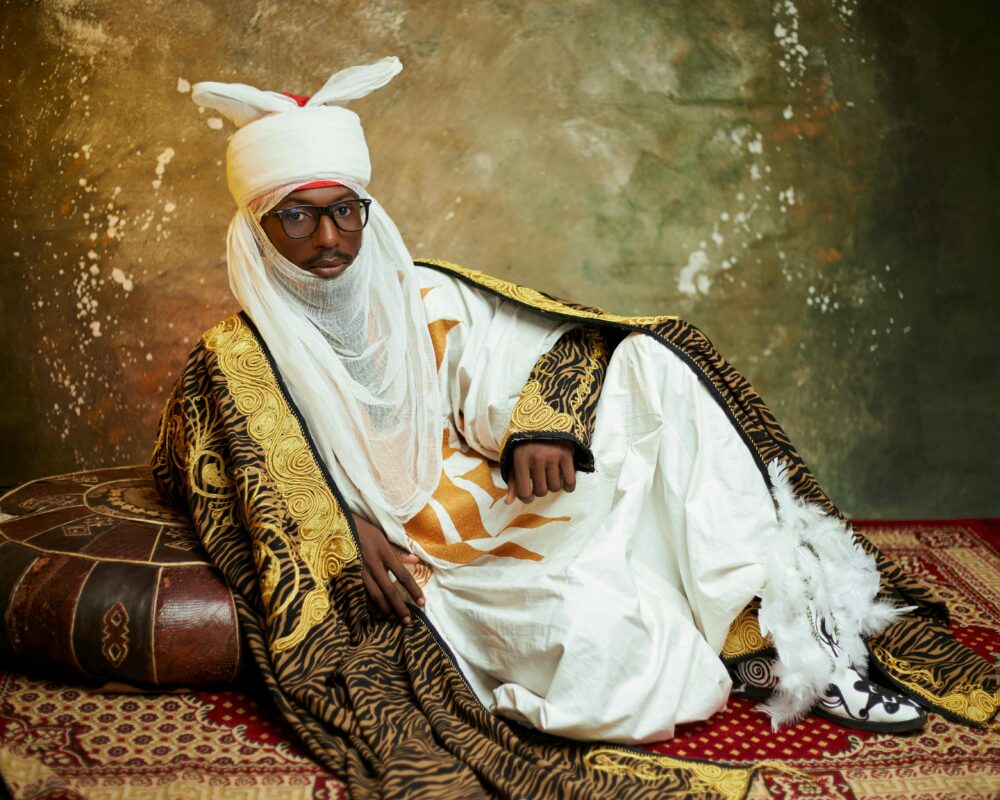
In the modern era, a piece of cloth on a woman’s head has drastically changed its function. It is no longer purely a spiritual instrument; it has morphed into a commodity of social judgment and the backbone of a massive fashion industry.
Every day, we are spoon-fed narratives by preachers and the apparel industry who dictate the exact centimeters of fabric required for salvation. They brand certain cuts of cloth with the stamp of “Syar’i” (Islamic compliant) while degrading others. The masses are indoctrinated to believe that the visualization of the ideal, pure Muslim woman is one tightly wrapped in precisely tailored, multi-layered garments—as if this was exactly how the inhabitants of 7th-century Medina looked.
Let us tear away this ahistorical illusion and look at the naked sociological reality of the past.
If the hijab in early Islam was viewed absolutely and exclusively as a parameter of purity and a guard against male lust across the board, then we collide head-on with a very brutal historical fact: The incident of Caliph Umar bin Khattab and the slave girl.
Narrated in authentic historical texts, Caliph Umar once struck a female slave (Amah) because she dared to wear a khimar (head veil). Umar rebuked her and ordered her to remove the cloth so that she would not resemble a free woman (Hurrah).
Imagine that happening today. A head of state beating a woman in the street for wearing a hijab, not for taking it off. Why was something currently regarded as an “absolute sacred duty” strictly forbidden for a specific social class at that time?
The answer is that in the ancient world—from the era of Assyrian Laws thousands of years before Islam, up to the 7th-century Arabian Peninsula—the head-covering was not a theological monopoly on purity. It was a marker of social caste and privilege.
Assyrian law explicitly forbade prostitutes and slaves from wearing the veil; the veil was the exclusive right of elite, free women who were under the protection of a clan or a husband. When the Quran was revealed and commanded Muslim women to draw their cloaks over themselves (Surah Al-Ahzab: 59), the verse provided a highly specific sociological justification: “That is more suitable that they will be known and not be abused.”
Known as what? Known as free women (Hurrah). On the streets of Medina, which were mixed with free women, slaves, and predatory men who often harassed slaves in the dark, the jilbab acted as a social billboard that read: “I am a free woman. I have a clan and laws that protect me. Do not harass me.”
Clothing in that era was an identity of class, not merely a matter of measuring exposed skin. That is exactly why slave women were forbidden from wearing it; so that the boundary of caste remained visible in a slave-owning society that had not yet been totally abolished.
Furthermore, what about the physical anatomy of the clothing itself?
The visualization of modern “Syar’i” clothing—precisely sewn with sleeves, buttons, zippers, and multiple layers—is the product of the sewing machine’s industrial revolution and cultural assimilation. Women’s clothing in the 7th-century desert (jilbab and khimar) was literally just a wide, unstitched piece of fabric draped and roughly wrapped around the body and chest to protect against extreme weather and external gaze. It was highly pragmatic, not sewn into a modern dress shape, and purely functional.
Today, when slavery has been eradicated from the face of the earth and social caste is no longer determined by a protective cloth on the street, the essence of that verse—which is safety, dignity, and protection from harassment—remains eternal. However, romanticizing the physical shape of the cloth into a rigid “Syar’i” industrial standard, and then weaponizing it to judge the moral purity of other women, is a form of historical blindness.
This religion descended to elevate human dignity, not to establish a garment industry based on the dogma of fear.