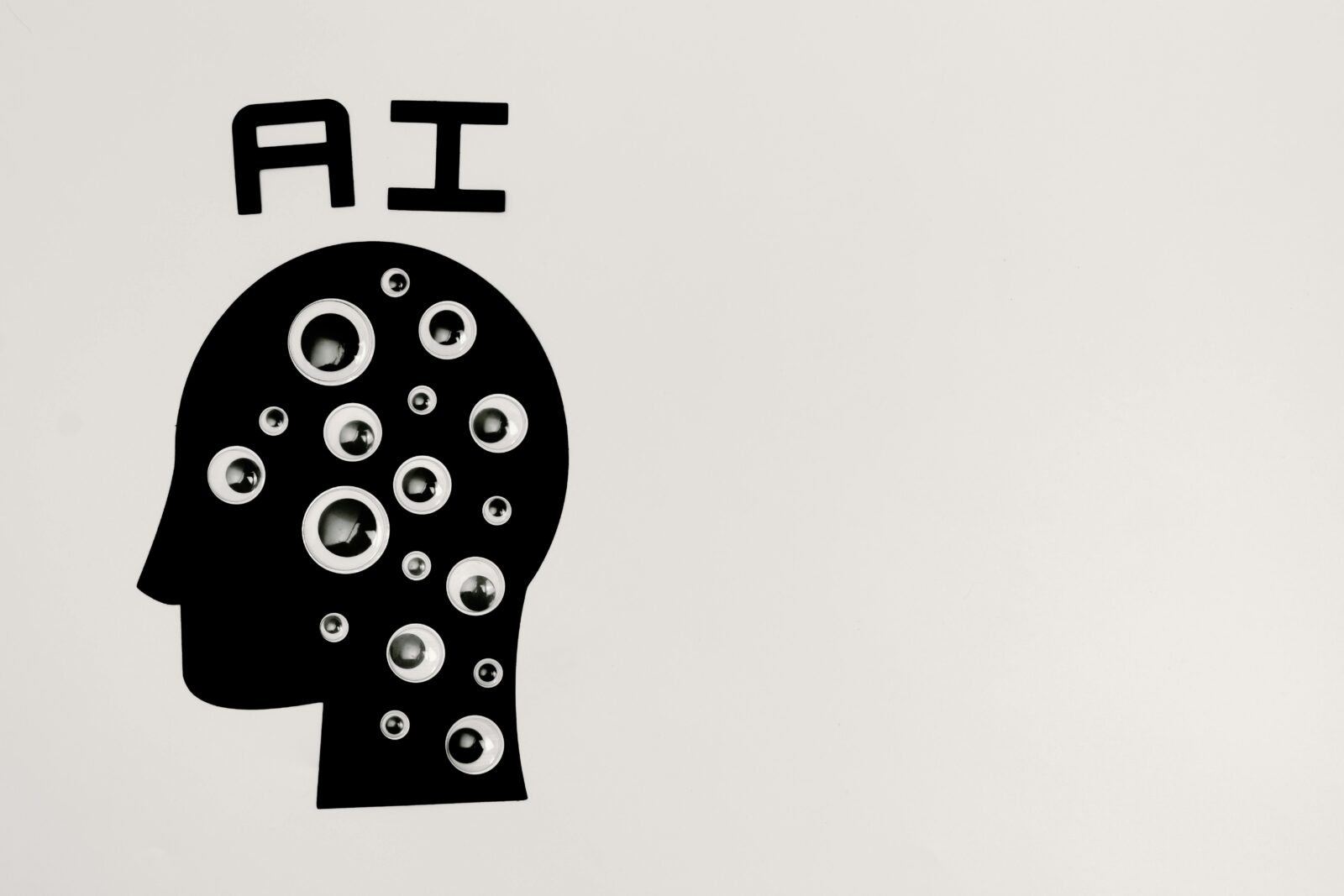
There is an unspoken fear, yet it heavily permeates the air around our religious pulpits today: the fear of algorithms and machines daring to interfere with divine revelation.
The public sneers at, and often condemns, anyone who attempts to seek textual truth, dissect history, or compare cross-jurisprudential rulings through Artificial Intelligence (AI). There is an unwritten stigma that religion is far too sacred to be tapped out on a keyboard, and too divine to be processed by an artificial neural network. “He who studies religion without a teacher has the devil for a guide,” is the classic proverb frequently hurled as the ultimate weapon to shut down the discourse.
But let us place that proverb on the operating table and dissect what society is truly afraid of—or, more accurately, what the clerical class is terrified of.
This fear stems from two deeply intertwined fallacies: the romanticization of intellectual suffering and the threat of a collapsing monopoly on knowledge.
For centuries, we have been conditioned to revere the tales of classical scholars who walked for months across unforgiving deserts from Mecca to Yemen, just to verify the chain of transmission of a single narration. Their sweat, the blisters on their feet, and their starvation were romanticized as the gold standard of seeking knowledge. Consequently, when computational machines can perform a comparative verification of four schools of thought across thousands of classical texts in mere milliseconds, our subconscious rebels. We feel the value of that knowledge is “cheapened” simply because the physical suffering has been erased.
We have catastrophically failed to separate the essence from the method. What made the journey of those classical scholars magnificent was not the blisters on their feet, but their uncompromising dedication to validating the truth. Machines do not alter the essence of that truth; they merely collapse spatial and temporal distance. Rejecting AI because it is “too fast and instant” is as illogical as refusing to take an airplane for the Hajj pilgrimage, insisting on riding a camel so the worship feels “more sacred.”
Certainly, there is a real danger that cannot be ignored. That danger is called Algorithmic Taqlid (Blind Imitation of Algorithms). If a layman, blind to Arabic morphology and devoid of religious literacy, asks a machine a theological question and takes its rigid, context-lacking output as an absolute fatwa, they have prostituted their intellect. For the layman, AI often becomes a “wheelchair” that further paralyzes their critical reasoning. Auto-generated text has no soul; it cannot distinguish between tears shed out of the fear of God and a mere shortness of breath. A machine processes syntax, not intention.
However, this narrative flips one hundred and eighty degrees when artificial intelligence is placed in the hands of those with a solid foundation of knowledge. In the hands of someone who understands the grammar of revelation, grasps the sociological history of the past, and holds the absolute parameters of truth within their chest, the machine is no longer a wheelchair. It becomes an exoskeleton—a mechanical armor that multiplies the force of the strike.
A calculator in the hands of a child who does not understand the concept of multiplication will only make them lazy. But a calculator in the hands of an architect will birth the precise calculations needed to construct a skyscraper.
The spiritual architect does not swallow whole what the machine regurgitates. They use this computational search engine purely as heavy machinery to lift thousands of classical literatures in the blink of an eye, to sort data patterns that human eyes could never index, and to arrange them into a neat structure. Once the machine finishes the heavy lifting, the human takes over. They act as the judge and the curator. They use their human intuition, their empathy, and their absolute memorization to filter the machine’s hallucinations, inject hikmah (wisdom), and breathe warmth into cold text.
The sneers directed at the use of analytical technology in religion often do not stem from a genuine concern for theological corruption, but rather from the panic of losing privilege. When a colossal library—whose keys have historically been guarded by a feudal clerical few—can suddenly be accessed, analyzed, and synthesized independently by the public, the gatekeepers lose their market and their stage.
Religion was sent down as hudan lin-naas—a guidance for all mankind—not merely as an exclusive commodity requiring paid clerical bureaucracy to access. If a silicon-based algorithm can assist a servant in understanding the greetings of their Lord more intimately, comprehensively, and independently, then utilizing that machine is not an act of desecration. It is the highest form of gratitude for the intellect God has bestowed.